
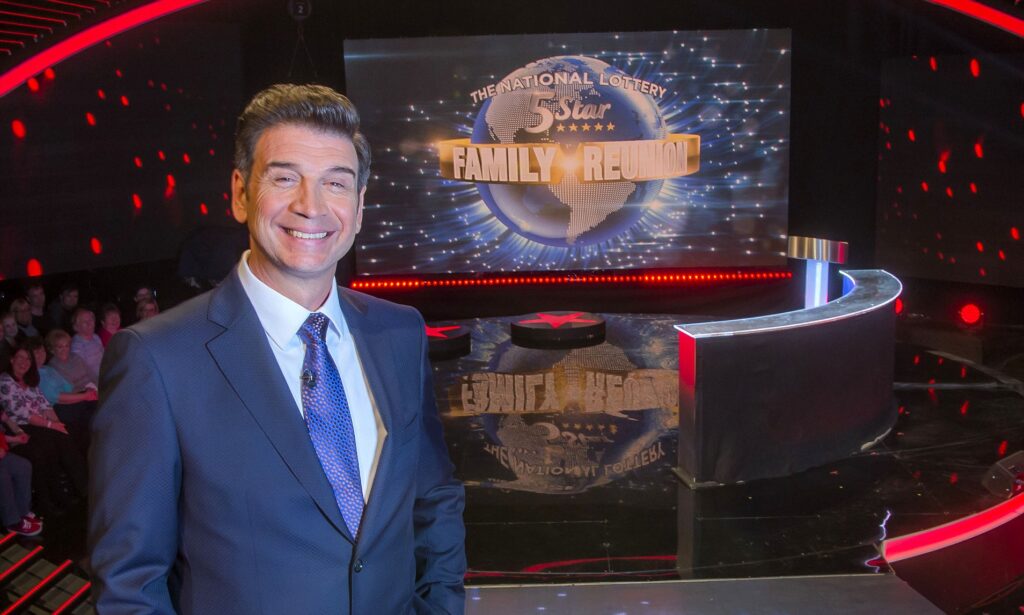
Who has not imagined scooping a life-changing jackpot?
For more than 25 years, the UK’s National Lottery draw has captured the public’s imagination.
It has turned ordinary ticket holders into multi-millionaires overnight.
In this guide, we take a detailed look at how the UK Lottery operates, how the EuroMillions fits into the picture, and what you should know before playing.
How Does the UK National Lottery Work?
The flagship Lotto game requires players to choose six numbers from 1 to 59.
A draw then randomly selects six main numbers plus a bonus ball.
Matching all six numbers wins the jackpot, while smaller prizes are awarded for matching fewer numbers.
Tickets can be purchased online, via the official app, or at authorised retailers.
Players may choose their own numbers or opt for a “Lucky Dip,” where numbers are randomly generated.
EuroMillions, introduced in 2004, operates across multiple European countries.
Players select five main numbers and two “Lucky Stars.”
Because it pools entries from several nations, jackpots can climb into the hundreds of millions.
Who Can Play the National Lottery?
In the UK, you must be at least 18 years old to purchase a lottery ticket.
This applies to all National Lottery games, including scratchcards and instant-win products.
Players must also be physically located in the UK or the Isle of Man when buying tickets online.
The National Lottery also offers entries into the weekly EuroMillions lottery, which comes with a much bigger jackpot in line with other European lotteries.
Lottery Winning Numbers and Jackpots
The flagship Lotto game holds two weekly draws: one on Wednesday evening and the televised Saturday event.
Each Lotto ticket costs £2 and enters players into the main jackpot draw.
This guaranteed raffle was introduced after the lottery’s early years, when jackpots could roll over repeatedly without a winner.
Extended rollovers led to periods without headline-grabbing prizes, which in turn reduced public interest and ticket sales.
To address concerns and maintain excitement, the guaranteed jackpot and raffle system were added.
In addition to the main jackpot, which is at least £1 million, the raffle also awards twenty guaranteed prizes of £20,000.
The total jackpot value for each draw is determined by the prize fund, which depends on ticket sales.
If no one matches all six main numbers, the jackpot rolls over to the next draw, increasing in size.
In the early days, there was no cap on rollovers, meaning jackpots could accumulate for many consecutive weeks.
Here is a great overview of what you are playing for.
| Match 6 Main Numbers | Jackpot |
| Match 5 Main Numbers + Bonus Ball | £1,000,000 |
| Match 5 Main Numbers | £1,750 |
| Match 4 Main Numbers | £140 |
| Match 3 Main Numbers | £30 |
| Match 2 Main Numbers | Free Lucky Dip |
When are National Lottery Draws Held?
Lotto draws typically take place twice a week, on Wednesdays and Saturdays.
EuroMillions draws are held on Tuesdays and Fridays.
Results are available shortly after the draw online and via official channels.
For many years, the operators of the National Lottery have partnered with the BBC to broadcast the Saturday Lotto draw live on BBC One.
As the numbers are drawn, they are immediately made public.
Results are widely shared across television and radio bulletins and appear in newspapers the following day.
They are also posted instantly on the official National Lottery website.
Players who purchase tickets through an online account receive automatic notifications if they have won.
Those who buy tickets in-store can check them at any authorised National Lottery retailer using a terminal; there is no need to return to the shop where the ticket was originally purchased.
Winners usually have 180 days from the date of the draw to claim their prize.
If the deadline passes, the money, plus any interest earned, is redirected to National Lottery-funded projects.
Are Lottery Winnings Taxed?
One of the most attractive aspects of winning in the UK is that lottery prizes are paid tax-free.
There is no income tax on the jackpot itself.
HM Revenue and Customs (HMRC) does not tax winnings from the National Lottery, meaning players receive their prize money in full.
This differs from some other countries, where lottery payouts above a certain threshold are subject to income tax deductions.
While the prize itself is tax-free, substantial winnings can have longer-term tax implications.
Large estates, particularly those including property, investments, or high-value assets, may become liable for inheritance tax, which can reach 40% above the relevant threshold.
For this reason, major winners are often advised to seek qualified financial and legal guidance.
Careful planning around investments, trusts and wills can help ensure wealth is managed efficiently and passed on in a tax-effective way.
Syndicates can present additional complications.
If a syndicate win is paid to one named individual, typically the manager, and that person were to die within seven years, the distribution of funds could potentially fall under inheritance tax rules relating to gifts.
This highlights the importance of having a clear, properly drafted and witnessed syndicate agreement in place before tickets are purchased, helping to protect all members should unforeseen circumstances arise.
What Is a Lottery Syndicate?
A syndicate is a group of people who pool money to buy multiple tickets together.
If one of the tickets wins, the prize is shared among members. Syndicates increase the number of combinations played, but any winnings are divided.
Many workplace colleagues, families, and groups of friends run informal syndicates. It’s important to have clear agreements in writing to avoid disputes.
National Lottery syndicates can cause issues, especially if they are not clearly structured from the get-go.
While syndicates are a popular way to boost the number of tickets played, problems can arise when expectations are not set out in advance.
The National Lottery offers detailed guidance on its website explaining how to organise and manage a syndicate responsibly.
One of its key recommendations is that all members sign a written agreement before any tickets are purchased.
This, in turn, helps prevent misunderstandings and protects everyone involved if a prize is won.
To make things run more smoothly, the National Lottery provides a downloadable template agreement that outlines essential points to avoid any disputes.
The suggested agreement typically includes:
- Leadership roles – Appointing a syndicate manager and deputy responsible for buying tickets, checking results, claiming prizes and distributing winnings.
- Member details – Recording each participant’s name, their contribution per draw, their share of any winnings, plus signatures and dates.
- Payment terms – Setting clear deadlines for contributions and stating what happens if someone fails to pay on time.
- Exit arrangements – Explaining the process if a member decides to leave the syndicate.
A Brief History of the National Lottery
Before the arrival of the National Lottery, large-scale gambling opportunities in the UK were limited.
Betting laws were strict, and most people who dreamed of a windfall turned to football pools run by companies.
Even though casinos existed, they did so in small numbers and under tight regulation.
When bookmakers were legalised in the 1960s, betting shows became a familiar sight on high streets, with most wagers placed on horse and greyhound racing.
Meanwhile, bingo halls thrive in towns and cities across the country, often linking games nationally to offer bigger and better jackpots.
Everything changed in 1994 with the launch of the National Lottery.
Weekly televised draws quickly became a cultural event, and the idea that ‘it could be you’ entered everyday conversation.
The lottery not only created millionaires but also generated billions for public projects, arts initiatives, sports and heritage funding.
Most Frequently Picked Numbers
These numbers have been drawn the most times over the past 12 months. The frequency represents how many times each number has appeared during that period.
| Ball Number | 09 | 36 | 38 | 42 | 59 | 11 | BONUS 19 |
|---|---|---|---|---|---|---|---|
| Frequency | 19 | 15 | 15 | 15 | 15 | 14 | 5 |
| Last Time Drawn | 07/03/2026 | 25/02/2026 | 03/01/2026 | 10/12/2025 | 07/02/2026 | 18/02/2026 | 07/03/2026 |
| Number of Draws Skipped | 0 | 3 | 18 | 25 | 8 | 5 | 0 |
Least Frequently Picked Numbers
These numbers have appeared the least often over the past 12 months. The frequency shows how many times each number has been drawn during that time period.
| Ball Number | 19 | 29 | 44 | 14 | 21 | 23 | BONUS 03 |
|---|---|---|---|---|---|---|---|
| Frequency | 5 | 5 | 5 | 6 | 6 | 6 | 0 |
| Last Time Drawn | 04/02/2026 | 04/02/2026 | 14/01/2026 | 21/02/2026 | 26/11/2025 | 24/01/2026 | 14/12/2024 |
| Number of Draws Skipped | 9 | 9 | 15 | 4 | 29 | 12 | 128 |
Most overdue numbers
These are the numbers that have gone the longest without appearing over the past 12 months. The frequency indicates how many times each number has been selected during that period.
| Ball Number | 21 | 42 | 16 | 55 | 38 | 48 | BONUS 48 |
|---|---|---|---|---|---|---|---|
| Frequency | 6 | 15 | 11 | 11 | 15 | 12 | 0 |
| Last Time Drawn | 26/11/2025 | 10/12/2025 | 24/12/2025 | 27/12/2025 | 03/01/2026 | 03/01/2026 | 09/10/2024 |
| Number of Draws Skipped | 29 | 25 | 21 | 20 | 18 | 18 | 147 |
Biggest National Lottery Jackpots and Winners in the UK
The largest prize ever won in the UK came from the EuroMillions, which is part of the National Lottery family of games.
The biggest jackpot of £195 million was won by an anonymous UK ticket holder on 19th July 2022.
This became the biggest lottery win in British history, surpassing the previous record of about £184.2 million.
While EuroMillions has the largest jackpots, the traditional UK Lotto has also created many millionaires:
- £35.1 million – largest single-ticket Lotto win.
- £66 million jackpot – shared by two winners in 2016.
- £32.5 million – won by Gerry and Lisa Cannings in 2016.
Other lotteries have also created some of the biggest winners in the UK, including:
| Year | Winner | Jackpot |
|---|---|---|
| 2022 | Anonymous UK winner | £195 million |
| 2022 | Joe & Jess Thwaite | £184.2 million |
| 2019 | Anonymous UK ticket holder | £170 million |
| 2011 | Colin & Chris Weir | £161.6 million |
| 2019 | Frances & Patrick Connolly | £114.9 million |
How is the reliability of the UK national lottery results ensured?
The UK National Lottery takes the reliability and integrity of its results very seriously.
Multiple systems, procedures, and independent checks are in place to ensure that every draw is fair, random, and tamper-proof.
Here’s how it works:
- Traditional Lotto and EuroMillions draws use mechanical draw machines with numbered balls.
- Machines and balls are regularly tested for uniformity to ensure each number has an equal chance of being drawn.
What is the National Lottery’s return rate?
- The average payout percentage for Lotto is around 50%.
- This means that for every £1 spent, roughly 50p goes back to players as winnings.
- For EuroMillions, the payout is slightly lower, at approximately 50–55%.
- Other games like Thunderball or Set For Life have varying returns, usually in the 45–55% range.
What are Your Real Chances of Snapping Up a Huge Jackpot?
Record-breaking prizes regularly grab headlines, but the odds of landing one remain extremely slim.
The largest sum ever won by a UK ticket-holder was an impressive £161 million, claimed in 2011 by Chris and Colin Weir.
Wins on this scale are still possible, yet both the National Lottery and the EuroMillions are fundamentally games of chance.
If you believe luck is on your side, the only way to stay in the running is to keep entering.
Still, many players wonder whether there are ways to improve their chances.
In reality, no strategy can change the mathematical probability of a random draw.
Here are five commonly suggested tips and tricks that players use.
Consider grouping your numbers
Many players prefer to space their selections evenly across the number grid.
But since that’s a popular approach, some choose to cluster numbers closer together instead.
The reasoning is simple: if those grouped numbers are drawn, fewer players may have picked the same combination, meaning a better chance of keeping the prize to yourself.
Avoid relying solely on birthdays and anniversaries
A common habit is to select meaningful dates, such as birthdays, anniversaries, and lucky days. While sentimental, this limits your choices to numbers between 1 and 31.
Since so many players follow this pattern, combinations above 31 are selected less frequently.
Choosing higher numbers doesn’t increase your odds of winning, but it could reduce the chance of sharing a prize if you do.
Don’t assume last week’s numbers will repeat
Some players believe recently drawn numbers are “due” to appear again. In reality, each draw is independent.
The probability of the exact same combination being selected in consecutive draws is extremely low.
Past results have no bearing on future outcomes.
Join a lottery syndicate
Pooling resources with others allows you to enter more combinations than you could individually.
A syndicate increases overall coverage of number combinations, which statistically improves the group’s chances of a win, though any prize is shared among members.
For those who want to play consistently without missing draws, syndicates can be an organised and cost-effective option.
Aim for a balanced total
Some enthusiasts analyse past results and suggest keeping the sum of your selected numbers within a certain range, often between 90 and 160 for five-number combinations in EuroMillions.
Historically, many winning sets have fallen within that range.
That said, it’s important to remember: every number combination has exactly the same probability of being drawn. Patterns observed in previous draws don’t influence future results.
UK National Lottery’s Winning Interviews
There have been quite a few winners of the UK National Lottery. Here are some of the best ones:
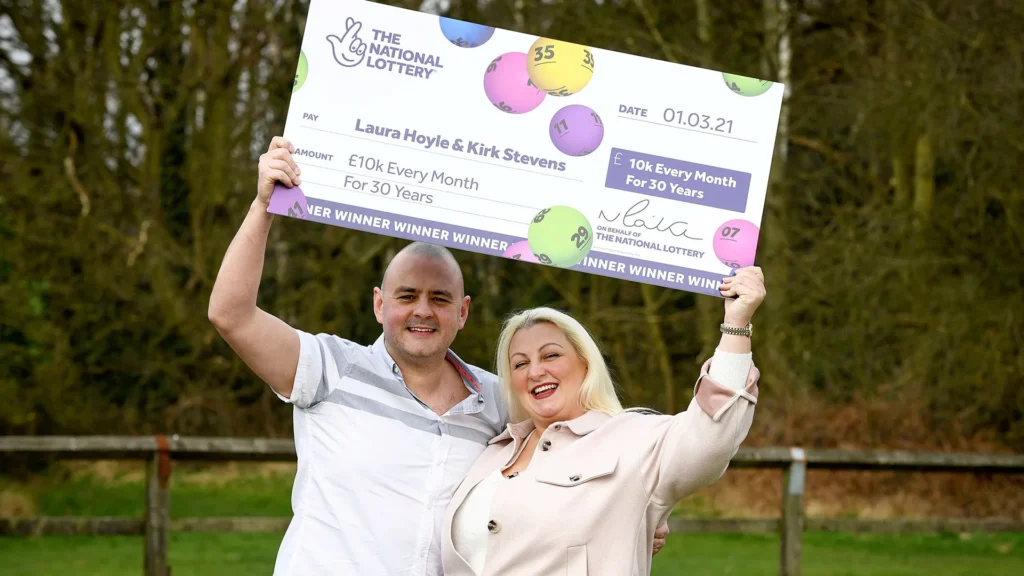
Laura Hoyle and Kirk Stevens won £10,000 a month for 30 years in a Set For Life draw. When Laura first confirmed the win over the phone, her partner filmed her saying it still “feels surreal” and that she was about to quit her job after seeing the winning confirmation.
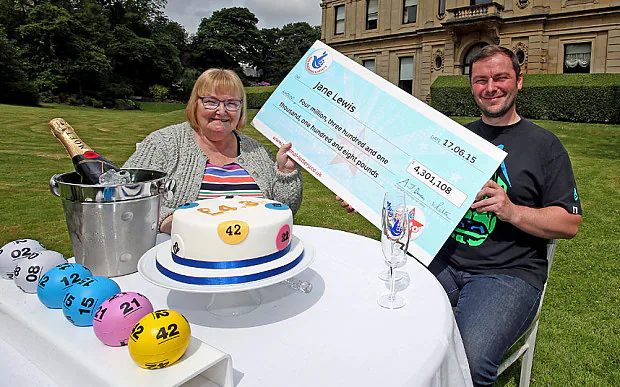
Jane Lewis, a Lotto winner from Halifax, made headlines when her emotional phone call to confirm a £4.3 million Lotto win was recorded, illustrating the genuine shock and disbelief many winners feel in the moment.
UK National Lottery – FAQs
What is the UK National Lottery?
The National Lottery is a government-regulated lottery in the UK, offering games like Lotto, EuroMillions, Thunderball, and scratchcards. It was launched in 1994 to provide entertainment while raising funds for good causes across the UK.
Who can play the National Lottery?
You must be 18 or older to buy tickets, whether in-store or online. Players must also be physically located in the UK or the Isle of Man when purchasing online.
Are lottery winnings taxed?
No. All winnings from the UK National Lottery are tax-free. However, future tax liabilities may apply if you invest winnings, buy property, or leave assets to heirs, so financial planning is recommended.
What is a lottery syndicate?
A syndicate is a group of players who pool money to buy multiple tickets, increasing the chance of winning. Winnings are shared among members according to a pre-agreed arrangement. A written agreement is strongly recommended.
Can I increase my chances of winning?
The lottery is a game of chance, so there’s no guaranteed strategy. Some players join syndicates, choose a mix of high and low numbers, or avoid common selections like birthdays to reduce the chance of splitting prizes.